Best Time to Visit Cyprus: Weather Month by Month
Cyprus is one of the best destinations in Europe for reliable sunshine, with more than 320 days of sunshine each year and a Mediterranean climate that keeps the island pleasantly warm for much of the year. That’s one of the reasons Cyprus works so well as a year-round destination, especially if you’re looking to swap grey skies for long sunny days.
In general, the best time to visit Cyprus is between April and October, when conditions are especially good for swimming, beach days, sightseeing and exploring beyond the coast. Spring brings green landscapes and comfortable temperatures for sightseeing, summer is built for long beach days and swimming, while autumn keeps the sea warm long after much of Europe has cooled down.
That said, the best month for your trip depends very much on what you want to do and see. The climate in Cyprus changes noticeably through the seasons, from hot summers to mild winters, so choosing the right month can make a real difference to the kind of holiday you have. In this guide, we’ll help you find the best month for your trip, depending on the weather, activities and experience you’re looking for.

Disclosure: This blog post contains affiliate links. We may receive a small commission for purchases or bookings made through these links, at no extra cost to you. We only recommend products and services that we’ve personally used and genuinely like. By using our links, you help support our blog and allow us to continue creating helpful free travel guides like this one. For more info, please read the privacy policy.
Cyprus Weather Throughout the Year
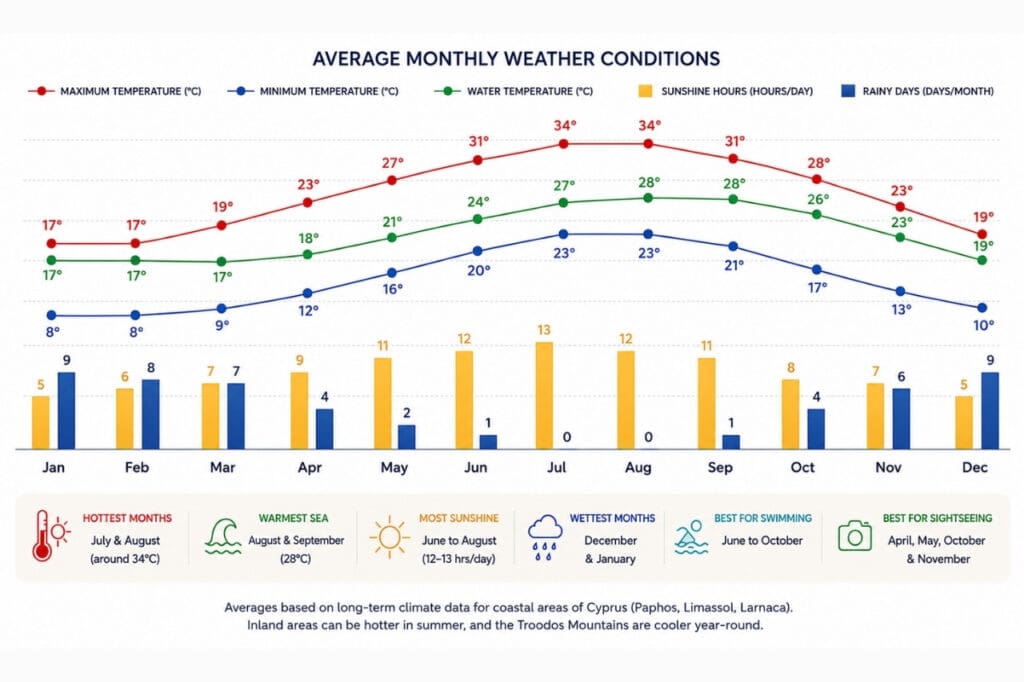
Best Time to Visit Cyprus at a Glance
The best month for visiting Cyprus depends largely on the kind of trip you’re planning, so it’s worth thinking about what you want to see and do before you plan a trip to Cyprus. Some months are ideal for long beach days and warm sea temperatures, while shoulder season is far better for sightseeing, hiking or travelling when the island feels quieter.
|
Trip Priorities |
Best Months |
|---|---|
|
Beaches and swimming |
June to October |
|
Sightseeing |
April and May, October and November |
|
Hiking and walking tours |
April and May, October and November |
|
Fewer crowds |
March to June, September to November |
|
Lowest prices |
November to March |
For many first-time visitors, September and October often offer the easiest balance because the sea stays warm, daytime temperatures remain comfortable, and most of the island is still fully active without peak summer intensity.

Need a Little Help Planning Your Cyprus Trip?
Planning a trip to Cyprus is exciting, but working out what to see, where to stay and how to fit it all together isn’t always so easy. That’s where we come in, with three ways to make planning easier, from a little expert guidance to a fully personalised Cyprus itinerary.
Weather and Temperatures in Cyprus: Month by Month
Although Cyprus enjoys sunshine in every season, the island doesn’t feel the same throughout the year. Sea temperatures, rainfall, hotel prices and even the atmosphere in coastal towns shift noticeably from month to month, which is why timing matters more than many first-time visitors expect. Some months are ideal for long beach days, others work better for sightseeing, hiking or travelling when prices are lower. Here’s what each month in Cyprus is really like.
January
January is the coolest month of the year in Cyprus, but compared with much of Europe, it still feels relatively mild. Daytime temperatures usually sit around 16 to 17°C, while evenings can feel chilly, especially inland or in the mountains where temperatures drop much more quickly after sunset.
If you’re travelling to Cyprus in January, you’ll notice a quieter atmosphere almost everywhere, particularly in coastal resort areas where some seasonal hotels and restaurants close for winter. That also makes it one of the cheapest times to go to Cyprus, with lower hotel prices and fewer visitors than at any other point in the year.
Rain is more likely in January than during the rest of the year, but sunshine is still common between showers. For beach holidays, this is often considered the worst time to visit Cyprus, simply because sea temperatures are too cool for most swimmers and beach towns feel much less lively. For walking, historical sites and slow winter travel, though, January can still work surprisingly well.

February
February still feels like winter in Cyprus, but brighter days start becoming more noticeable. Temperatures remain similar to January, usually around 18°C, yet sunny afternoons already start to feel much more inviting, especially along the coast.
One of the nicest things about February is that the island often begins to look greener. After winter rainfall, countryside areas and lower hills can feel fresh, and on clear days it becomes an excellent time for day trips in Cyprus, including scenic drives, village stops and quieter sightseeing.
Accommodation remains affordable in February, and coastal areas still feel noticeably quieter than they do later in spring. While sea temperatures are still cold for most visitors, February works well if you want Cyprus without crowds and a calmer atmosphere.

You may also want to read: Renting a Car in Cyprus: All You Need to Know
March
By March, Cyprus starts to feel noticeably more like spring than winter. Daytime temperatures usually climb to around 20°C, and although evenings still need a jacket, sunny afternoons can already feel very comfortable for walking, sightseeing and spending time outdoors.
This is one of the months when the island looks especially fresh, with greener landscapes and wildflowers still visible in many rural areas. March is also a good time if you’re interested in local events, because spring often brings village festivals, outdoor celebrations and the first signs of a more active travel season before Easter approaches.
If you prefer exploring rather than full beach days, March is often one of the most pleasant times to be in Cyprus. Many of the best outdoor activities in Cyprus are much more enjoyable at this time of year, as cooler temperatures make hiking, sightseeing and exploring far more comfortable. The sea remains cool, but archaeological sites, walking trails and coastal towns are far easier to enjoy than during the summer heat.

You might also enjoy reading: The Ultimate One Week in Cyprus Itinerary
April
April is often one of the most comfortable months to visit Cyprus because temperatures generally settle between 22 and 25°C, which feels warm without becoming tiring. It’s the kind of weather where you can comfortably combine beaches, sightseeing and longer day trips without constantly planning around midday heat.
One important thing to keep in mind is that Orthodox Easter, the most important religious holiday in Cyprus, often falls in April. During this period, villages and towns feel especially lively, churches are beautifully decorated, and local traditions become much more visible across the island.
Because it sits right in the middle of spring, April is also one of the strongest holiday months if you want Cyprus before peak summer arrives. The countryside is still green, many seasonal places reopen, and the overall atmosphere feels active without becoming crowded.

May
By May, Cyprus begins shifting into early summer, with daytime temperatures often reaching 26 to 28°C and many days already feeling ideal for the beach. The sea also becomes more comfortable, especially later in the month, which is why many visitors see May as one of the most balanced times for a first trip.
What makes May particularly appealing is how easy it still feels to combine different parts of the island in one day. You can spend the morning by the coast, explore inland villages later on, and still avoid the heavier heat that arrives in midsummer.
For many travellers, May hits the sweet spot between spring and summer, especially if you want warm weather without the intensity of July and August.


Plan Your Cyprus Trip With Our Travel Guide
Want all our favourite Cyprus spots in one place? Our Cyprus Travel Guide brings together our practical tips and recommendations, plus an interactive map with 250+ saved locations, including attractions, beaches, restaurants, hiking trails, wineries, villages and hidden gems – all easily accessible at your fingertips!
June
June is when summer becomes fully established in Cyprus. Temperatures often rise to 30°C or higher, rainfall becomes extremely unlikely, and long sunny days quickly turn the coast into the centre of island life.
The sea is now warm enough for long swimming sessions, beach clubs become busier, and evenings stay comfortably warm well after sunset. At the same time, inland areas already start feeling noticeably hotter, especially during the middle of the day.
If your trip is mainly about beaches, swimming and guaranteed sunshine, June is one of the strongest months to choose before peak summer crowds reach their highest point.
You might also be interested in: Best Beaches in Cyprus

July
By July, Cyprus is fully in peak summer mode, and the heat becomes much more noticeable across the island. Daytime temperatures regularly reach 32 to 35°C, with inland areas often climbing higher, especially around Nicosia where afternoons can feel intense.
What surprises many first-time visitors is that coastal areas often feel easier to handle than inland towns because of the sea breeze, particularly in the morning and late afternoon. That’s why beach days tend to work best with an early start, a long swim, and a shaded lunch once midday arrives.
July is an excellent month if your trip is mainly built around the coast, warm evenings and guaranteed sunshine. Sightseeing is still possible, but it usually makes more sense early in the day before the strongest heat settles in.

August
August is the hottest month of the year, so if you’re searching for the weather in Cyprus in August, expect long dry days, intense sunshine and daytime temperatures often reaching 35°C or more, especially inland. Along the coast, the heat can still feel strong, but sea breezes usually make beach areas more comfortable than inland cities.
If you’re visiting Cyprus in August, this is very much peak summer. Beaches are busy, hotels are in high demand, and many coastal areas stay lively well into the evening because people naturally shift outdoor activities later into the day.
If you enjoy proper summer heat, August is often considered the best time of year to visit Cyprus, especially if you want long days by the sea in coastal areas like Ayia Napa or Protaras. The sea is at its warmest, beach conditions are excellent, and rain is extremely unlikely. For longer sightseeing days or inland exploring, though, this is the month where heat becomes the biggest factor in how you plan your day.
Read more:
➞ 10 Best Beaches in Ayia Napa
➞ 14 Best Beaches in Protaras

September
September is often one of the easiest months to enjoy Cyprus because summer conditions remain firmly in place, but the atmosphere usually feels more relaxed than in August. Daytime temperatures often sit around 30 to 32°C, while the sea stays exceptionally warm after months of summer heat.
What makes September stand out is how balanced the month feels. Beaches are still at their best, evenings become slightly more comfortable, and it’s much easier to combine swimming with sightseeing or dinner outdoors without the intensity that peak summer can bring.
For many first-time visitors, September is one of the strongest months for an all-round Cyprus trip because you still get reliable beach weather without feeling locked into full summer routines every day.

October
October is often one of our favourite months for exploring Cyprus because temperatures usually settle around 26 to 28°C, which feels warm enough for the beach while also making day trips much easier. If you’re checking the weather on Cyprus in October, you can usually expect plenty of sunshine, warm sea temperatures and far more comfortable afternoons than in midsummer.
One reason spending October in Cyprus works so well is that the island becomes easier to enjoy beyond the coast. Walking through traditional villages, visiting archaeological sites in Paphos or spending time in cities such as Nicosia and Larnaca feels far more pleasant when the heat eases slightly.
Because the sea still holds summer warmth, October often gives you the best of both seasons. You can swim comfortably, plan longer drives, and still enjoy evenings outside without the heavier peak-summer heat.

You may also want to read: Best Things to Do in Cyprus
November
By November, Cyprus starts shifting into a quieter season, but daytime temperatures still often reach 24°C, especially during sunny periods along the coast. It’s a noticeably calmer month, with fewer visitors and a slower pace in many beach towns.
The sea remains swimmable for some visitors early in the month, although most people now choose Cyprus more for sightseeing, coastal walks and relaxed travel rather than full beach days.
November often appeals most if you prefer lower prices, easier hotel availability and a version of Cyprus that feels less seasonal but still comfortably mild.

December
December brings winter conditions back to Cyprus, though compared with much of Europe it still stays relatively gentle. Coastal daytime temperatures usually hover around 17 to 19°C, while evenings become cooler and occasional rain becomes more likely.
Although beach holidays are no longer the focus, December can still be enjoyable for short winter breaks, especially if you want mild weather and quieter towns. In the mountains, conditions often become cold enough for snow, which creates one of Cyprus’ most unusual seasonal contrasts.
It’s one of the few times of year when you can spend part of the day skiing in winter scenery of the Troodos Mountains and still return to a coastal café later on without heavy winter clothing.

Weather Differences Across Cyprus
Although Cyprus is a relatively small island, temperatures can feel surprisingly different depending on where you stay. Coastal towns such as Paphos, Ayia Napa and Protaras often benefit from sea breezes that make warm days more comfortable, especially during summer.
Further inland, Nicosia can feel far hotter during the summer months because there is no coastal airflow, while the Troodos Mountains stay noticeably cooler throughout the year and often offer relief when temperatures rise elsewhere on the island.
Cyprus is one of those destinations where there is no single perfect month, only the month that best matches the kind of trip you want. If beaches and warm sea are your priority, summer and early autumn are hard to beat. If you’d rather combine sightseeing, village stops and longer day trips without intense heat, spring and autumn often feel far more comfortable.
What makes Cyprus especially appealing is that every season offers something different, from quiet winter coastlines to lively summer evenings and green spring landscapes. Choosing the right month simply helps you experience the island in the way that suits you best.
Madeleine & Carsten
FAQ – Best Time To Visit Cyprus
What is the rainy season in Cyprus?
The rainy season in Cyprus usually runs from November to March, with the highest chance of rainfall between December and February. Even during winter, rain rarely lasts all day, and sunny periods are still common, especially along the coast. Compared with many other European destinations, winters remain relatively mild.
What is the best month for Cyprus?
For many travellers, September and October are often the best months to visit Cyprus because they combine warm sea temperatures, plenty of sunshine and more comfortable daytime temperatures than peak summer. If sightseeing and walking are a bigger priority, April and May are also excellent choices.
Is it warm enough to sunbathe in Cyprus in October?
Yes, in most years October is still warm enough for sunbathing in Cyprus. Daytime temperatures often stay between 26 and 29°C, and the sea remains warm after the summer months, which makes beach days very realistic well into autumn.
How hot is Cyprus in October?
October in Cyprus is usually pleasantly warm rather than intensely hot. Coastal areas often reach around 28°C during the day, while evenings become more comfortable than in July and August. Inland cities such as Nicosia can still feel warmer, especially early in the month.
Like this post? Pin it for later!